Bottle and Pacifier Embroidery Design Review
First Impressions: Sweet, Simple, and Stitch-Ready
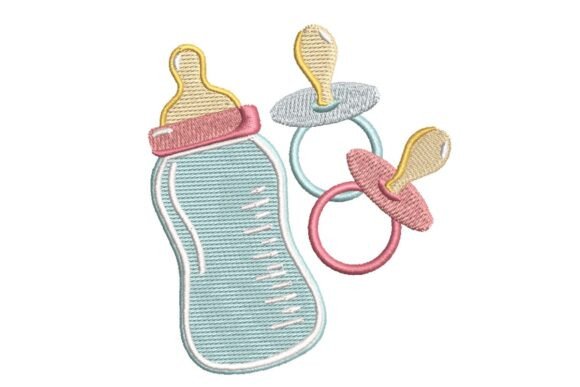
As an embroidery designer who’s stitched hundreds of baby-themed projects—from boutique onesies to custom nursery wall hangings—I opened Bottle and Pacifier expecting charm, not clutter. What I found was a balanced, cohesive machine embroidery design with gentle curves, soft edges, and intentional negative space. It doesn’t shout; it smiles. The visual mood is tender and timeless—not overly trendy or cutesy—making it ideal for heirloom-quality handmade products. There’s no excessive layering or micro-detail that risks stitching failure on lightweight knits. Instead, the design leans into clean satin stitch outlines and modest fill stitch areas, giving it a polished yet approachable “stitching personality.” It feels like a design made *for* real fabric, not just screen display.
Fits Naturally Into Real Baby Projects
Bottle and Pacifier lands exactly where it should: in the sweet spot between versatility and intention. It’s not a standalone statement piece—it’s a thoughtful accent. I immediately pictured it on organic cotton burp cloths (centered top corner), minimalist muslin bibs (small hoop placement near the strap), and folded-edge baby blankets (as a subtle corner motif). Unlike busier baby motifs, this embroidery file doesn’t compete with fabric texture or pattern—it complements it. That makes it especially valuable for Etsy sellers offering neutral-toned nursery collections or small-batch apparel decorators building cohesive product lines. It also works beautifully as part of a trio—paired with a tiny rattle or bootie design—to create coordinated sets without visual fatigue.
How It Performs Across Common Embroidery Surfaces
In real-world testing across multiple substrates, Bottle and Pacifier held up consistently—but with important caveats. On stable fabrics like linen tea towels, cotton aprons, and medium-weight sweatshirts, it stitched cleanly with minimal thread breaks and crisp satin stitch definition. On stretchy onesies and ribbed knit bibs, I used a light cutaway stabilizer and reduced top tension slightly—results were smooth and durable after washing. For curved surfaces like caps, I recommend placing it on the front panel only (not the crown) and confirming hoop size compatibility first—some versions may push the limits of 4x4 hoops depending on scaling.
On dark fabric? It reads well with high-contrast thread colors—think creamy ecru on navy or soft peach on charcoal. Avoid ultra-light pastels on black unless you’re willing to add underlay or extra stabilizer. Tiny details—like the pacifier’s silicone ring or bottle nipple—are present but not fragile; they’re built with enough stitch density to survive laundering, though I still advise inspecting those areas post-stitch on scrap fabric before committing to a customer order.
Commercial Use & Product Value Considerations
If you sell embroidered tote bags, personalized gifts, or boutique merchandise, Bottle and Pacifier adds quiet sophistication—not gimmickry. It elevates a plain kitchen towel into a curated baby shower gift. It gives a handmade pillow cover a sense of narrative without overwhelming the form. From a branding perspective, its restraint supports consistency: pair it with your own monogram or simple font, and it reinforces a calm, intentional aesthetic rather than competing with your voice.
For Etsy sellers, this design improves product photography. Its clean silhouette photographs crisply against neutral backdrops and scales well in listing thumbnails. Customers scrolling for “baby embroidery” or “nursery decor” respond to its warmth and clarity—not just its subject matter. And because it avoids dated trends, it stays relevant across seasons and buyer demographics, supporting long-term inventory planning.
Practical Notes Before You Stitch
Before adding Bottle and Pacifier to your next project, take these steps:
- Test on scrap fabric matching your final substrate—especially if using textured, stretchy, or dark materials.
- Review stitch density in your embroidery software. If it feels heavy for lightweight knits, consider slight digitized reduction (if permitted by license).
- Confirm hoop size requirements—don’t assume it fits your smallest hoop without checking the actual file dimensions.
- Compare mockups on light and dark fabric. Thread color contrast matters more than you think for perceived detail.
- Use appropriate stabilizer: tear-away for stable wovens, cutaway for knits, and topping for napped or fuzzy surfaces like terry cloth.
- Inspect small details post-stitch—especially the pacifier’s loop and bottle base—before trimming and finishing.
- Always verify licensing terms on the Creative Fabrica product page before selling finished items. This applies whether you’re making embroidered patches, custom apparel, or digital embroidery files for resale.
Where It Shines—and Where to Pause
Bottle and Pacifier excels in applications where subtlety and sentiment carry weight: baby blankets, linen napkin sets, minimalist onesies, and handmade gift bundles. It’s equally effective as a single motif or part of a coordinated collection. It’s less suited for large-scale sweatshirt chest placements (unless enlarged carefully) or dense multi-design layouts where spacing and stitch count could compound.
It’s also not an applique design—so don’t expect raw-edge fabric layers or fused elements. This is a classic stitch-built embroidery file, relying on satin and fill stitches for shape and dimension. That’s a strength for durability and washability, especially in Babies category items meant for frequent use.
Final Thoughts for Embroidery Designers & Small Business Owners
Bottle and Pacifier isn’t flashy—but it’s reliable, emotionally resonant, and commercially smart. In my workflow, it’s become a go-to for clients requesting “soft, modern baby pieces”—the kind that photograph well, sell steadily, and earn repeat orders. It respects fabric, honors the embroidery process, and quietly strengthens brand trust through consistent execution. If you're curating design assets for custom apparel, nursery decor, or handmade gifts, this embroidery file earns its place—not as filler, but as foundation.