Cute Lamb: A Designer’s Real-World Embroidery Review
First Impressions: Whimsy That Doesn’t Overpromise
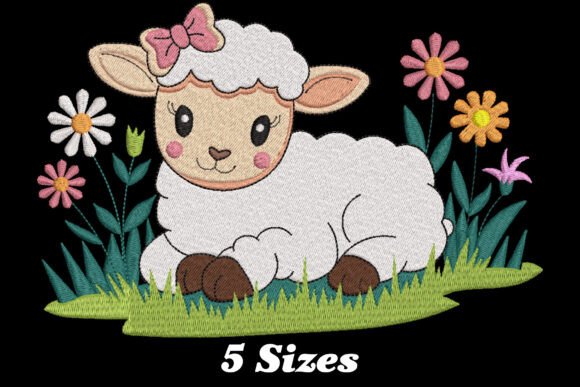
When I opened Cute Lamb for the first time, I wasn’t greeted with aggressive cuteness or cartoonish exaggeration — just a soft, balanced silhouette with gentle curves and intentional negative space. It reads as *baby animal* without tipping into saccharine territory. The head is slightly oversized (a smart nod to visual appeal at small scales), the ears tilt just enough to suggest personality, and the body shape avoids fussy detailing — which tells me this was designed with real stitch execution in mind, not just screen appeal. As a machine embroidery design, it feels like something you’d confidently use on a baby onesie or a boutique tea towel, not just pin to a mood board.
A Real Project Test: That Custom Tote Bag for a Local Nursery
Last week, I prepped Cute Lamb for a client order: a set of organic cotton tote bags for a new neighborhood nursery. Not mass-produced — each bag hand-stitched with care, labeled with a custom tag, and priced as a premium handmade product. I chose a mid-weight canvas, medium tear-away stabilizer, and matte cotton thread in ivory and pale gray. The result? Clean satin-stitch edges held beautifully, fill stitches laid flat without puffing, and the overall scale (about 3.2” wide) read clearly from three feet away — no squinting, no “what *is* that?” confusion. Customers didn’t just smile — they paused. One mom asked if it came in a matching bib design. That’s the sign of a working design: it sparks connection, not just decoration.
Where Cute Lamb Shines — And Where It Needs Thought
This embroidery file thrives where charm meets clarity: sweatshirt embroidery (especially on crewnecks with smooth knit fronts), embroidered patches (it holds up well when heat-applied to denim or twill), and baby embroidery on cotton interlock or gauze. Its moderate stitch density means it won’t overwhelm thin fabric — but I wouldn’t push it onto ultra-lightweight rayon challis without testing. On dark fabric, it gains warmth and depth; on light, it reads airier and more delicate. For holiday embroidery or wedding gifts (think: monogrammed linen napkins with a tiny Cute Lamb tucked beside initials), it adds quiet sweetness without competing.
That said — avoid tight curves unless you’re using a cap frame with proper tension control. I tried it on a structured baseball cap brim and saw minor puckering at the ear tips. Also, skip dense layering: don’t stack it over heavy quilting or topstitching. And while it works fine on t-shirts, always pair it with cutaway stabilizer underneath stretchy knits — the design’s gentle curves can distort if the base fabric gives too much.
What It Does for Your Craft Business — Beyond the Stitch
As an Etsy seller or small shop owner, Cute Lamb isn’t just another digital embroidery file — it’s a subtle trust-builder. Its consistency across projects (tote bags, pillow covers, aprons) reinforces brand cohesion without demanding a full logo system. Buyers recognize its gentle tone: it says “thoughtful,” not “trend-chasing.” When used on personalized gifts — say, a child’s name + Cute Lamb on a blanket — it elevates perceived value. No one mistakes it for clipart. That matters. In craft fairs or boutique settings, items featuring Cute Lamb stand out because they feel intentional, not algorithm-generated.
It also translates cleanly to printable mockups. I tested it in black-and-white line art for my digital product previews — no loss of character. That’s rare. Many baby animal designs collapse into blobs without color, but Cute Lamb retains its shape and expression even in grayscale. That makes it versatile for social media thumbnails, packaging labels, or wholesale lookbooks.
Practical Designer Notes You’ll Actually Use
- Always test first — especially on your target fabric + stabilizer combo. I ran three samples before the nursery tote order: one on scrap canvas, one on a folded t-shirt hem, one on a scrap of terry cloth towel (for future kitchen towel versions).
- Check thread color contrast early. This design relies on clean edge definition — low-contrast threads (e.g., light gray on heather gray) blur its charm.
- Review stitch density visually, not just numerically. Dense fill areas are minimal here, but zoom in on the face — make sure eyes or nose details won’t vanish on textured fabrics like waffle weave or looped terry.
- Confirm hoop size compatibility before digitizing for caps or curved surfaces. If your machine requires re-hooping mid-design, plan for alignment marks.
- Inspect small details under magnification — especially ear tips and hoof outlines. They’re crisp, but thread weight and needle size affect how finely they resolve.
- Test licensing terms before selling finished products or bundling Cute Lamb into digital embroidery kits. Since it’s listed under Baby Animals and Embroidery, verify commercial use rights directly with the source.
The Bottom Line for Makers Who Value Craft Over Clutter
Cute Lamb isn’t flashy. It doesn’t scream. But in a market flooded with over-digitized, overly complex machine embroidery designs, its restraint is its strength. It performs reliably across custom apparel, home goods, and baby items — and it supports your voice as a designer, not drowns it. Whether you’re stitching a single personalized gift or scaling up for a small shop product line, this embroidery design earns its place in your design assets library because it delivers what so many others don’t: quiet confidence, real-world function, and handmade warmth — stitched, not simulated.