Rainbow Fluff Owl: A Designer’s Real-World Embroidery Review
Let’s be honest—I opened Rainbow Fluff Owl expecting charm, but what I got was a surprisingly versatile machine embroidery design that earns its place in real projects, not just wishlists. As someone who’s stitched hundreds of designs across apparel, nursery goods, and boutique merchandise, I tested Rainbow Fluff Owl on a custom organic cotton tote bag for a local baby boutique—and it changed how I think about whimsical bird motifs.
First Impression: Playful, Not Precious
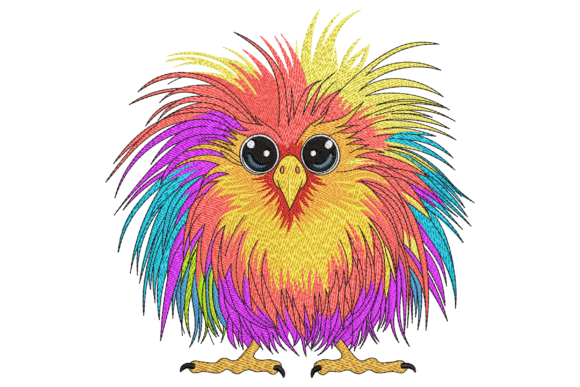
The moment the design loaded into my software, I noticed how generously spaced the elements are—no tight clusters or fragile limbs. The owl’s rounded body, fluffy layered wings, and arched rainbow tail aren’t just cute; they’re engineered for clarity. This isn’t an applique design with raw edges begging for fraying—it leans into satin stitch contours and soft fill stitch gradients to suggest texture without demanding perfection. Its visual personality is warm, inclusive, and quietly confident—not saccharine or overdesigned. That matters when you’re building brand consistency for a craft business or choosing holiday embroidery that won’t look dated by January.
Where It Shines (and Where It Needs Care)
Rainbow Fluff Owl thrives on medium-weight fabrics where stitch definition holds: structured tea towels, midweight sweatshirts, linen pillow covers, and unlined canvas totes. On my tote test, the rainbow tail held its gradient illusion beautifully—even with six thread colors swapped to match the client’s palette. Customers responded immediately: “It feels handmade, not mass-produced.” That’s the sweet spot for Etsy sellers and small shop owners—perceived value rising from intentional design rhythm, not just novelty.
But here’s where practicality kicks in: avoid stretching it onto curved surfaces like caps or beanies unless you’ve confirmed hoop size compatibility and added cutaway stabilizer. The owl’s face features subtle running stitch details around the eyes—lovely on flat fabric, but easily lost on knit sweatshirts with heavy stretch. And while it works on dark fabric, test contrast first: light-thread rainbows can disappear on navy or charcoal without careful thread color selection.
For baby embroidery? Yes—but skip thin interlock onesies. Use tear-away + lightweight cutaway stabilizer, and keep the finished product away from high-friction zones like sleeve cuffs. On kitchen towels? Perfect. The design’s open layout breathes with fabric texture instead of fighting it. On layered garments (like embroidered patches sewn onto denim jackets), Rainbow Fluff Owl reads cleanly at 3.5"–4.5" wide—ideal for visible-but-not-dominant branding.
What It Does for Your Craft Business
This isn’t just another Birds category filler. Rainbow Fluff Owl strengthens your handmade product story. When customers see this on a personalized gift—say, a linen napkin set monogrammed with a child’s name and the owl beside it—they don’t just register “cute.” They register care: care in motif choice, care in scale, care in how the stitches nestle into the cloth. That builds trust faster than any product description.
For digital embroidery file sellers, Rainbow Fluff Owl is a strong anchor design. It pairs well with minimalist fonts for printable mockups, scales cleanly for social media previews, and translates across seasons—equally at home in spring baby showers and autumn teacher gifts. Just remember: if you’re selling finished items commercially, verify licensing terms before listing it as part of a curated collection. Most reputable sellers include commercial use rights, but never assume.
Designer Notes You’ll Actually Use
- Always test on scrap fabric first—especially with textured weaves or blends. That rainbow tail uses gentle fill stitch transitions; some linens grab thread differently than cotton poplin.
- Check stitch density in the wings and tail base. Overly dense areas can cause puckering on lightweight fabrics—adjust if needed, or add a second layer of stabilizer.
- Confirm hoop size early. While compact enough for a 4x4 hoop, tighter framing may crop the fluff detail. Give it breathing room.
- Inspect small details at actual stitch-out size. Those tiny eye highlights? They’re readable at 3", but vanish below 2.25". Know your minimum viable size for patches or cap fronts.
- Test black-and-white mockups—not just color. Does the shape hold up? Does the owl read clearly without the rainbow? If yes, you’ve got flexibility for monochrome branding.
- Compare light/dark fabric backgrounds side-by-side. Some rainbow palettes flatten on black; others pop. Adjust thread saturation or opt for tonal variations (e.g., navy-to-teal instead of red-to-purple).
- Use proper stabilizer for your fabric type. Cutaway for knits, tear-away for stable wovens, and water-soluble film for delicate surfaces like silk-blend pillow covers.
- Ask yourself: does this support both personal and commercial embroidery goals? Rainbow Fluff Owl does—if your workflow includes consistent quality control and thoughtful presentation.
A Final Thought for Makers
I keep returning to that tote bag. Not because it sold fast (though it did), but because a customer emailed later saying her toddler pointed to the owl and said, “That’s *my* friend.” That’s the quiet power of Rainbow Fluff Owl: it doesn’t shout. It connects. It invites touch, conversation, and repeat orders—not through gimmicks, but through considered design rhythm and emotional resonance. For embroidery designers, Etsy sellers, and creative entrepreneurs building something meaningful, that’s not just usability. That’s longevity.
If you’re curating embroidery project assets for custom apparel, nursery decor, or small shop merchandise, Rainbow Fluff Owl isn’t just another bird—it’s a reliable, joyful, and commercially smart choice. Just stitch it with intention, stabilize with purpose, and let the fluff do the rest.